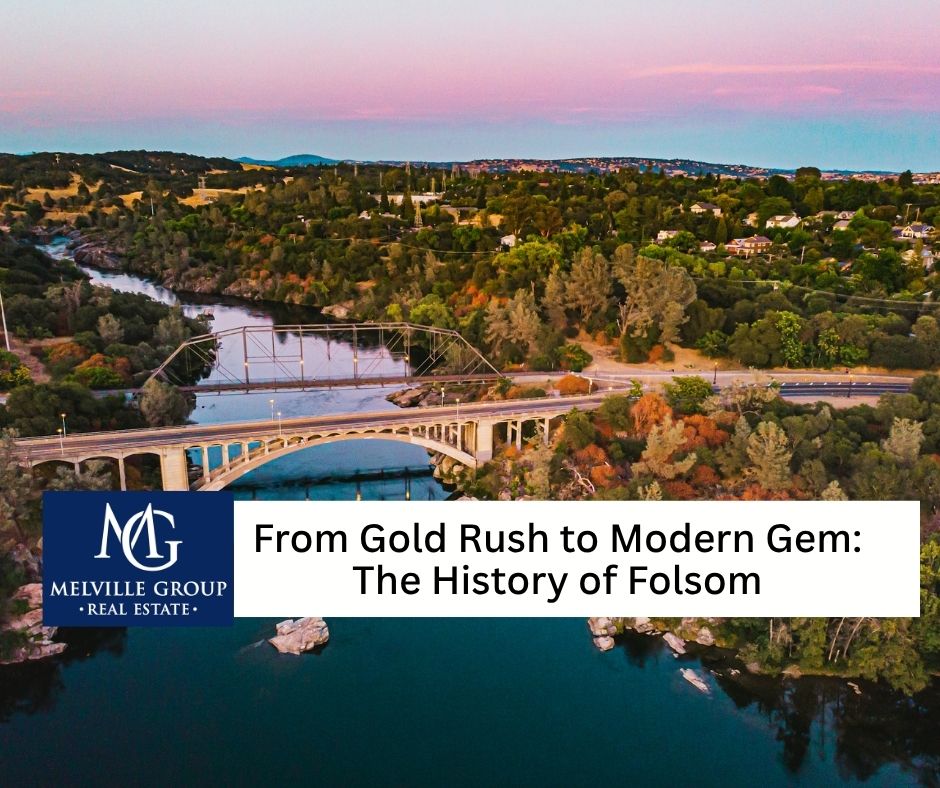
From Gold Rush to Modern Gem: The Fascinating History of Folsom
Folsom history: What do gold miners, California’s first passenger railroad, Johnny Cash, and modern-day Folsom have in common?
Quite a bit, actually!
Today, Folsom, California, is known for its beautiful neighborhoods, outdoor recreation, historic downtown, and proximity to Sacramento and the Sierra Nevada foothills. But beneath its modern appeal is a colorful history that helped shape California itself.
And the best part? You can still experience much of that history today.
Before the Gold Rush: Folsom’s Earliest Residents
Long before gold seekers arrived in California, the land surrounding the American River was home to the Southern Maidu and Nisenan peoples.
For generations, Indigenous communities lived along the river and throughout the surrounding foothills, establishing a connection to the land that predates the city by centuries.
That history remains an important part of Folsom’s story, even as the discovery of gold dramatically transformed the region.
Folsom History: Gold Fever Comes to the American River
When James Marshall discovered gold at Sutter’s Mill in nearby Coloma in 1848, everything changed.
Prospectors poured into the Sierra foothills, searching for fortune along the American River and its tributaries.
By 1849, a mining settlement had developed near present-day Folsom. Known historically as Negro Bar and now commemorated as Black Miners Bar, the area was associated with some of the African American miners who participated in California’s Gold Rush.
The American River became a magnet for miners, merchants, and entrepreneurs. What began as scattered mining camps soon developed into a bustling center of commerce and transportation.
But Folsom’s future wasn’t destined to depend on gold alone.
From Granite City to Folsom
Here’s a little local trivia: Folsom wasn’t originally called Folsom!
In the 1850s, the developing town was known as Granite City.
Captain Joseph Libbey Folsom, a former U.S. Army officer and landowner, envisioned a thriving community that could serve the growing mining region. He hired railroad engineer Theodore Judah to survey the townsite.
Unfortunately, Captain Folsom died in 1855, before seeing his plans fully realized.
The town was subsequently renamed Folsom in his honor.
And the railroad project he helped champion would soon put the community on the map.
All Aboard! Folsom Makes Railroad History
On February 22, 1856, the Sacramento Valley Railroad completed its first official run between Sacramento and Folsom.
The approximately 22-mile route became California’s first passenger railroad, helping connect the Sacramento Valley with the Gold Country.
Imagine the excitement!
Instead of relying entirely on wagons and stagecoaches, passengers and goods could travel by rail between Sacramento and Folsom.
The railroad helped establish Folsom as a transportation hub for mining communities throughout the foothills.
Today, you can explore this chapter of local history in Historic Folsom, where the railroad depot, turntable, and nearby landmarks recall the city’s early days.
A Gold Rush Town That Helped Power California
Folsom wasn’t finished making history.
In 1895, the Folsom Powerhouse helped demonstrate the possibilities of long-distance electrical transmission by sending electricity approximately 22 miles to Sacramento.
At a time when electricity was transforming American life, Folsom was at the forefront of innovation.
Today, the Folsom Powerhouse State Historic Park preserves this remarkable piece of California history.
It’s a reminder that the city was never simply a mining town. Folsom also helped develop the infrastructure and technology that helped California grow.
The Johnny Cash Connection
Of course, no conversation about Folsom’s history would be complete without mentioning Johnny Cash.
Folsom State Prison opened in 1880, but it became internationally famous through Cash’s music.
His song Folsom Prison Blues and his legendary 1968 live performance at the prison forever connected the singer with the city.
Today, the Johnny Cash Trail celebrates that history while providing a scenic recreational route for walkers, runners, and cyclists.
It’s another example of how Folsom has creatively connected its past with its present.
Folsom History: The Second Gold Rush
The next major transformation came in the mid-20th century.
Construction of Folsom Dam began in 1948 and was completed in 1955.
The project created Folsom Lake and helped provide flood protection, hydroelectric power, and water resources for the growing Sacramento region.
It also brought new opportunities for development.
The City of Folsom describes the growth period after the dam’s construction as its “second Gold Rush.”
Today, Folsom Lake and nearby Lake Natoma are among the area’s most recognizable recreational destinations, attracting visitors for boating, kayaking, cycling, hiking, and waterfront relaxation.
Where Can You Experience Folsom’s Gold Rush History Today?
One of the things that makes Folsom special is how accessible its history remains.
Start with a stroll through Historic Folsom, particularly Sutter Street, where preserved architecture meets restaurants, boutiques, entertainment, and community events.
The Folsom History Museum offers a deeper look at the city’s early residents, Gold Rush beginnings, railroad history, and development.
Nearby, the Folsom Powerhouse State Historic Park tells the story of the city’s electrical innovations.
And for those who prefer exploring on foot, the city’s self-guided Historic Folsom Walking Tour connects landmarks such as Sutter Street, Leidesdorff Plaza, the railroad turntable, and the historic Truss Bridge.
It’s a wonderful way to spend an afternoon discovering the people and places that shaped this community.
From Gold Country to a Place to Call Home
Nearly two centuries after the California Gold Rush, Folsom continues to attract people looking for opportunity.
Its historic downtown, established neighborhoods, newer communities, recreational trails, and access to the American River and Folsom Lake offer a lifestyle that combines California history with modern convenience.
And while the gold miners who arrived in the 1800s were searching for treasure, today’s residents might argue that Folsom’s real treasure is the community itself.
Thinking about making Folsom your home?
At The Melville Group, we love helping buyers and sellers discover what makes Folsom and the surrounding Sacramento and El Dorado County communities special.
Whether you’re drawn to Folsom’s history, outdoor lifestyle, or beautiful neighborhoods, we’d love to help you find your own little piece of Gold Country.
17 total views, 17 views today